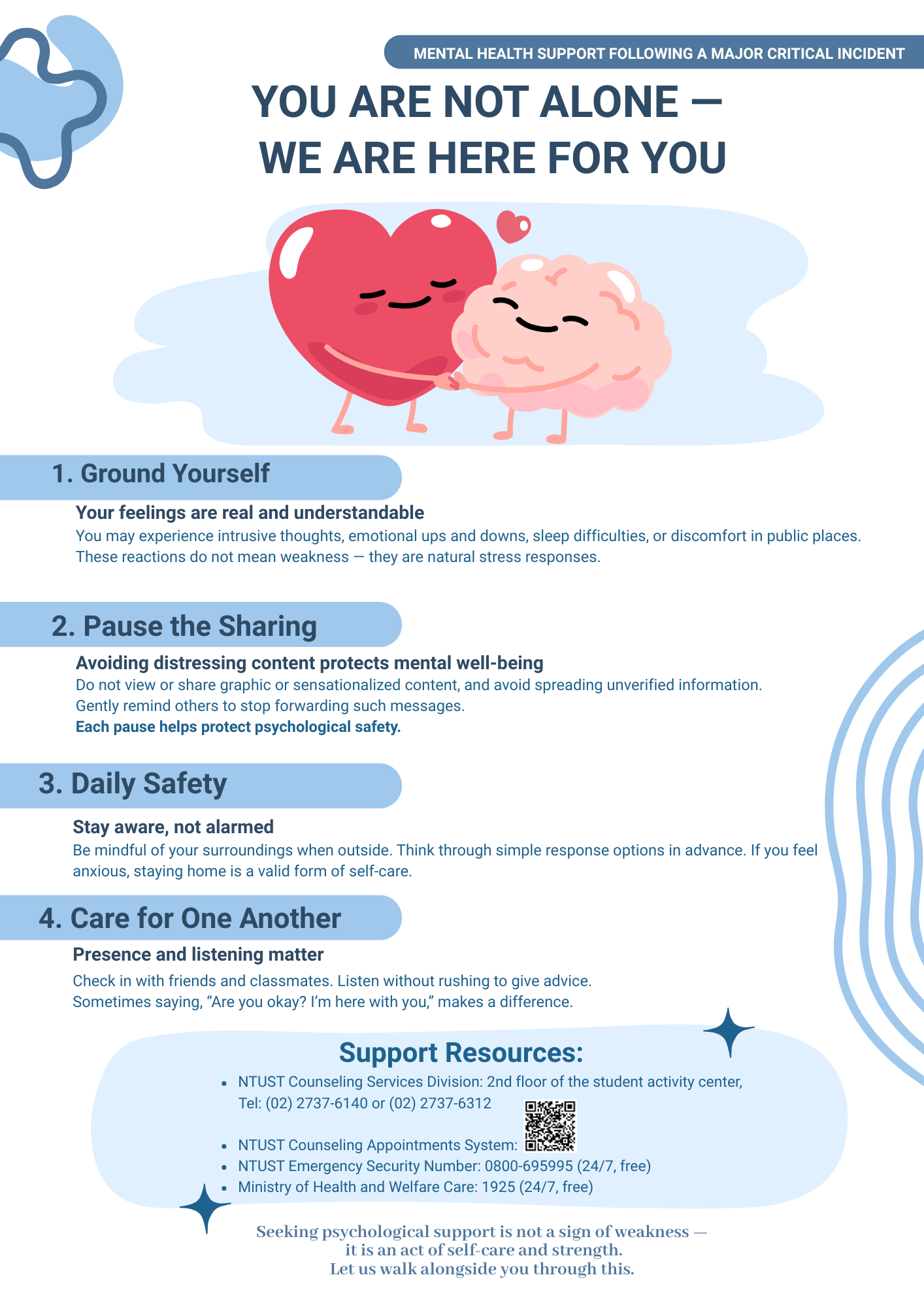
【Counseling Services Division】Taking Care of Your Mental Well-Being After a Major Incident
Dear Students,
Recent violent incidents in society may have caused feelings of fear, anxiety, unease, or emotional distress for some of you. Even if you were not directly involved, these reactions are normal and understandable responses to critical events. This message is here to remind you that you are not alone, and support is available.
1. Take Care of Your Inner World — Your Feelings Are Valid
After such events, you may notice:
- Repeated thoughts about the incident or difficulty concentrating
- Feelings of anxiety, irritability, sadness, or emotional numbness
- Changes in sleep or appetite, or physical discomfort
- Avoidance of public places or reluctance to go out
These reactions do not mean something is wrong with you. They are common stress responses. Most will ease with time, rest, and support.
You do not need to force yourself to “be okay” right away.
2. Stop the Spread — Protecting Psychological Safety
Overexposure to distressing information can increase anxiety. You can help by:
- Avoiding graphic or disturbing images and videos
- Not sharing unverified or sensationalized information
- Gently reminding others to stop forwarding such content
- Protecting younger or more vulnerable individuals from exposure
Every choice not to share helps protect mental well-being.
3. Daily Safety Tips — Stay Aware, Not Alarmed
- When going out
- Stay aware of your surroundings
- Notice exits and crowd flow
- Go with friends or inform others of your plans
- Mental preparation
- Briefly think about what you could do in an emergency
- Preparation can reduce panic
- Staying at home
- If you feel anxious, staying home is a valid form of self-care
- Relaxation activities can help your body and mind settle
4. Caring for Each Other — A Powerful Source of Safety
- Check in on friends and classmates
- Listen and stay present, rather than telling someone to “stop worrying”
- Those who witnessed or were close to the incident may need extra support
Sometimes saying, “Are you okay? I’m here with you,” can make a big difference.
5. When Feelings Feel Overwhelming, Please Seek Help
Consider professional support if you experience:
- Intense emotions lasting for several days that affect daily life or academic functioning
- Severe anxiety, panic, sleep disturbances, or persistent psychological and physical tension
- Intense fear of going out or being in public spaces
Seeking help is not weakness — it is strength and self-care.
📌 Support Resources
- NTUST Counseling Services Division: On the 2nd floor of the student activity center, Tel: (02) 2737-6140 or (02) 2737-6312
- NTUST Counseling Appointments System: https://sa.ntust.edu.tw/WebCounseling/Front_Index/FrontIndex/index
- NTUST Emergency Security Number: 0800-695995 (24/7, free)
- Ministry of Health and Welfare Care Line: 1925 (24/7, free)
Please remember:
Critical incidents remind us of the importance of caring for and staying connected with one another.
Let us respond together without panic, without spreading unverified information, without division — by supporting one another and safeguarding safety with reason and care
Take it step by step. We will gradually regain a sense of safety. You are not alone.